 By admin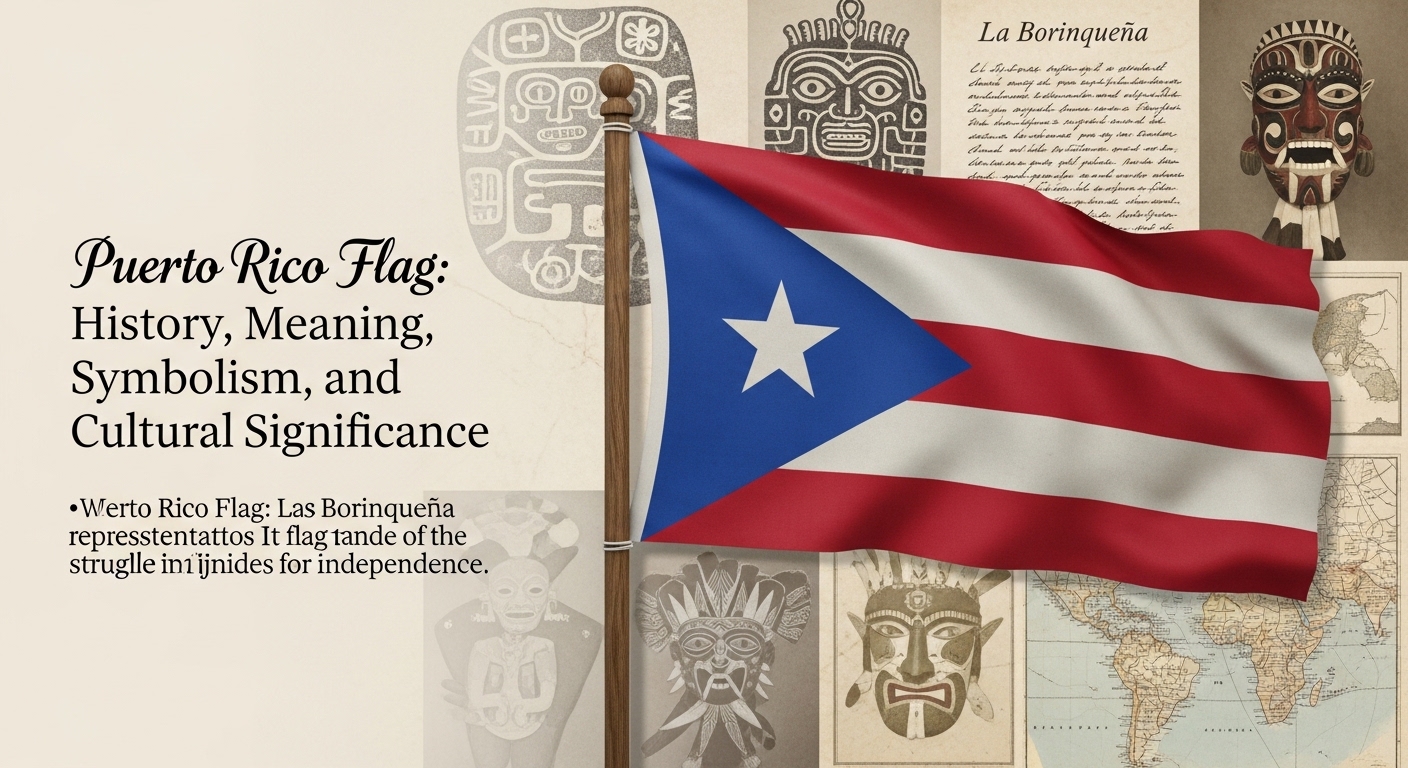
National flags are more than decorative pieces of cloth; they are living symbols of history, struggle, identity, and pride. Among the most recognizable flags in the Caribbean, the Puerto Rico flag stands as a powerful emblem of cultural heritage and collective memory. Its bold colors and simple yet meaningful design tell a story of resistance, unity, and hope that spans generations.
For Puerto Ricans, both on the island and throughout the global diaspora, the flag represents far more than territorial identity. It reflects political struggles, cultural survival, and the ongoing quest for self-determination. Understanding the origins and symbolism of this flag provides deeper insight into Puerto Rico’s past, present, and future.
Origins of the Puerto Rican Identity
To fully appreciate the significance of the flag, it is essential to understand Puerto Rico’s historical identity. Puerto Rico’s cultural roots blend Indigenous Taíno heritage, Spanish colonial influence, African traditions, and later American governance. This complex history shaped a unique national consciousness long before any official symbol existed.
During the 19th century, as independence movements spread across Latin America and the Caribbean, Puerto Rican intellectuals and revolutionaries began seeking ways to express their national identity. Symbols became essential tools for uniting people under a shared vision, eventually leading to the creation of a flag that would embody these aspirations.
Historical Background of the Puerto Rico Flag
The Puerto Rico flag was first conceived in 1895 by Puerto Rican exiles living in New York City. Inspired by the Cuban flag—another symbol of anti-colonial struggle—the design was intentionally similar, with reversed colors to emphasize solidarity while asserting a distinct identity.
At the time, Puerto Rico was still under Spanish rule, and displaying the flag on the island was strictly prohibited. It served as a revolutionary emblem, flown secretly by independence supporters and used during uprisings such as the Grito de Lares. Although Spain later ceded Puerto Rico to the United States in 1898, the flag continued to symbolize resistance and national pride.
Design and Structure of the Flag
The flag consists of five horizontal stripes—three red and two white—with a blue equilateral triangle on the hoist side containing a single white star. While the design appears simple, every element was deliberately chosen to convey meaning.
The symmetry and bold contrast make the flag instantly recognizable, while its balanced layout reflects unity and harmony. Over time, the design has remained unchanged, reinforcing continuity and tradition.
Meaning of the Colors and Symbols
The Red Stripes
The three red stripes symbolize the bloodshed and sacrifice of those who fought for Puerto Rico’s freedom. They represent courage, strength, and the willingness of the people to defend their identity against oppression.
The White Stripes
The white stripes stand for victory, peace, and individual liberty. They also represent the fundamental human rights that Puerto Ricans have long sought to protect and preserve.
The Blue Triangle
The blue triangle symbolizes the sky and coastal waters surrounding the island, as well as the principles of republican government. The triangle’s three sides are often interpreted as representing liberty, equality, and fraternity.
The White Star
The lone white star signifies Puerto Rico itself—its unity, individuality, and place among the nations of the world. It reflects the island’s enduring spirit and sense of belonging.
Political and Cultural Symbolism
Throughout history, the flag has been associated with political movements advocating independence, autonomy, or enhanced self-governance. Because of this, the Puerto Rico flag was banned by U.S. authorities from 1898 until 1952. Displaying it during this period could result in fines or imprisonment.
Despite these restrictions, the flag became an underground symbol of resistance. Its continued use strengthened its emotional power, transforming it into a representation of cultural survival rather than merely political ideology.
Evolution of the Flag Over Time
Although the design itself has remained constant, interpretations of the flag’s meaning have evolved. Early revolutionaries saw it as a symbol of independence from Spain. Later generations associated it with resistance to U.S. political control and cultural assimilation.
Today, the flag represents a broad spectrum of identities and beliefs, uniting people across political differences under a shared heritage.
The Flag and Puerto Rican Nationalism
Nationalism in Puerto Rico is deeply tied to cultural preservation—language, music, food, and traditions. The flag plays a central role in this movement, often displayed during protests, cultural festivals, and national holidays.
For many, waving the Puerto Rico flag is an assertion of dignity and self-respect, regardless of political status debates. It allows individuals to express pride in their roots while honoring those who came before them.
Legal Status and Official Recognition
In 1952, when Puerto Rico became a Commonwealth of the United States, the flag was officially recognized and legalized. This marked a significant moment in Puerto Rican history, as the symbol once outlawed became an accepted representation of the island’s identity.
Today, the flag is flown at government buildings, schools, and international events, reinforcing its legitimacy and importance.
Displaying the Flag: Etiquette and Protocol
Respect for the flag is deeply ingrained in Puerto Rican culture. It should never touch the ground, be displayed upside down (unless as a sign of distress), or be used disrespectfully.
When flown alongside the U.S. flag, the Puerto Rico flag is typically placed at equal height, symbolizing dignity and mutual recognition. These protocols reinforce the flag’s symbolic value and cultural significance.
The Flag in Modern Puerto Rican Society
In contemporary Puerto Rico, the flag is omnipresent. It appears on murals, clothing, jewelry, and tattoos, especially among younger generations. Following natural disasters such as Hurricane Maria, the flag became a symbol of resilience and solidarity.
For many citizens, the flag represents hope and collective strength during times of hardship.
Global Recognition and Diaspora Influence
Millions of Puerto Ricans live outside the island, particularly in cities like New York, Orlando, and Chicago. In these communities, the flag serves as a powerful connection to home.
Parades, cultural festivals, and political demonstrations often feature the Puerto Rico flag, reinforcing identity across borders and generations.
The Flag in Art, Music, and Popular Culture
Artists and musicians frequently incorporate the flag into their work as a statement of cultural pride. From salsa album covers to contemporary street art, the flag remains a vibrant and evolving symbol.
Popular musicians have used the Puerto Rico flag on stage and in music videos, bringing global attention to its meaning and history.
Controversies and Debates Surrounding the Flag
While widely respected, the flag has also been at the center of political debates. Some view its display as a call for independence, while others see it as a neutral cultural symbol.
Despite differing interpretations, the flag continues to unite Puerto Ricans by representing shared experiences and values.
Comparison With Other Caribbean Flags
Compared to other Caribbean flags, Puerto Rico’s design stands out for its simplicity and revolutionary roots. While many regional flags feature complex coats of arms, this flag relies on color and geometry to convey meaning.
This simplicity enhances its global recognition and symbolic strength.
Educational Importance of the Flag
Teaching children about the Puerto Rico flag is an essential part of cultural education. Schools use the flag as a starting point to discuss history, civic responsibility, and national identity.
Understanding the flag helps younger generations appreciate the struggles and achievements of their ancestors.
Preservation and Respect for the Flag
Preserving the flag’s dignity involves proper storage, respectful display, and education about its meaning. Many organizations promote awareness campaigns to ensure that the flag is treated with the honor it deserves.
The Flag as a Symbol of Resilience
Few symbols capture the resilience of a people as effectively as this flag. Through colonial rule, political change, economic challenges, and natural disasters, it has remained a constant source of strength.
The Puerto Rico flag continues to inspire unity, reminding people that identity endures even in adversity.
Conclusion
The Puerto Rico flag is far more than a national emblem—it is a living narrative of struggle, pride, and perseverance. From its revolutionary origins to its modern-day presence in global culture, the flag embodies the spirit of the Puerto Rican people.
By understanding its history, symbolism, and cultural impact, one gains deeper respect for the island’s identity and the powerful role symbols play in shaping collective memory. As generations continue to reinterpret its meaning, the flag remains a timeless expression of unity and hope.
Frequently Asked Questions (FAQs)
What does the Puerto Rico flag symbolize?
It symbolizes unity, freedom, sacrifice, and the cultural identity of the Puerto Rican people.
Who designed the Puerto Rico flag?
Puerto Rican exiles in New York designed it in 1895, inspired by revolutionary ideals.
Why was the flag once illegal?
It was banned under U.S. rule because it was associated with independence movements.
When did the flag become official?
The flag was officially recognized in 1952 when Puerto Rico became a Commonwealth.
Why is the flag important today?
It represents cultural pride, resilience, and unity for Puerto Ricans worldwide.
Recommended
If you enjoy exploring cultural symbols and destinations rich in history and identity, you may also like our detailed guide on Lake Atitlán Guatemala. This article explores one of Central America’s most breathtaking natural landmarks, known for its deep cultural roots, indigenous heritage, and stunning volcanic scenery. Just like the Puerto Rico flag reflects the soul of a nation, Lake Atitlán Guatemala represents the natural and cultural heart of the region, making it a perfect complementary read.