 By admin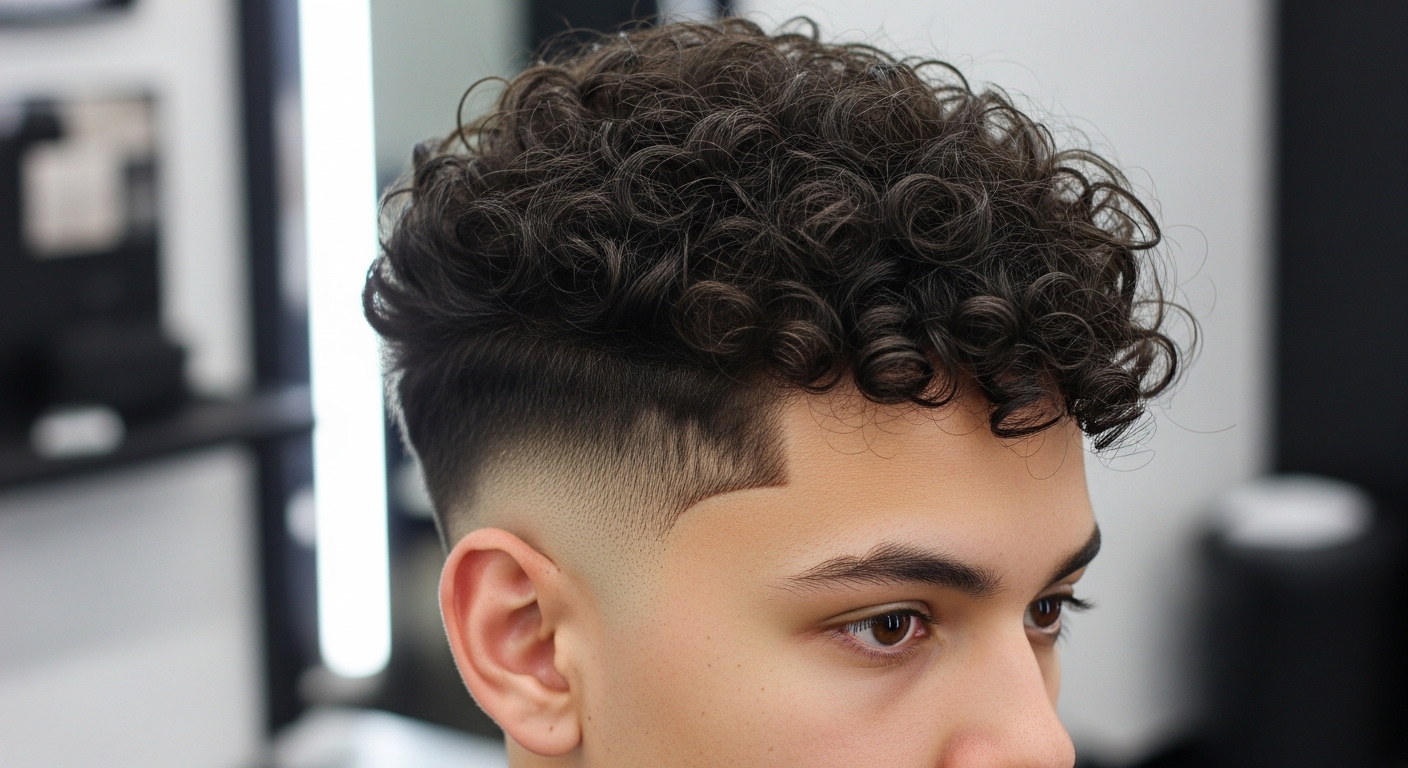
Curly Hair has always been a symbol of individuality, texture, and natural character. Unlike straight hair, curls carry movement, volume, and personality that instantly stand out. Over the years, curly textures have moved from being misunderstood to becoming a major focus in modern grooming and hairstyling trends. Today, curls are no longer something to hide or flatten; instead, they are celebrated and styled with intention.
This article explores what curly hair truly is, how it differs from straight hair, why genetics plays a crucial role, and why curls often require extra care. It also examines modern haircuts—especially the mid taper—and how contemporary grooming practices have transformed the way curly hair is worn and maintained.
Understanding Curly Hair and How It Differs From Straight Hair
Curly hair is defined by strands that grow in a spiral, wave, or coil pattern rather than falling straight down. This natural shape is created by the structure of the hair follicle and the way keratin bonds form inside the hair shaft. In contrast, straight hair grows from round follicles and has a uniform structure that allows oil to travel easily from root to tip.
One of the most noticeable differences between curly and straight hair is texture behavior. Straight hair tends to reflect light evenly, making it appear shinier and smoother. Curly hair, however, bends and twists, which can cause light to scatter, often giving it a more matte appearance. This difference also affects how each hair type reacts to humidity, styling, and grooming routines.
Another major difference lies in manageability. Straight hair usually falls into place with minimal effort, while curls require intentional care to maintain shape and definition. This does not mean curly hair is difficult by nature—it simply demands a different approach that respects its structure.
Different Types of Curly Hair Textures
Not all curls are the same. Curly textures exist on a wide spectrum, and understanding these variations helps explain why one routine or haircut does not work for everyone.
Loose Curls and Soft Waves
Loose curls sit between straight and fully curly textures. They often appear as large waves or gentle spirals that frame the head naturally. This type of curl tends to have more movement and can appear fuller with minimal styling.
Tight Curls
Tight curls are more defined and compact. They form visible ringlets and hold their shape strongly. While they often look voluminous, they are also more prone to dryness because natural oils struggle to travel down the twisted strands.
Coily and Kinky Textures
Coily hair features very tight curls or zig-zag patterns. This texture is highly expressive but also the most fragile. It requires consistent moisture and thoughtful grooming to maintain health and elasticity.
Each of these textures falls under the broader category of Curly Hair, yet their needs and styling outcomes can differ significantly.
The Role of Genetics in Curly Hair
Genetics plays a powerful role in determining whether hair grows straight, wavy, or curly. The shape of the hair follicle is inherited, and this shape dictates how the hair strand grows out of the scalp. Oval or asymmetrical follicles typically produce curly textures, while round follicles lead to straight hair.
Genetic influence also affects curl tightness, thickness, and density. This explains why people within the same family can have different curl patterns. Environmental factors and hair care habits may influence appearance, but genetics sets the foundation.
Understanding this genetic aspect is important because it reinforces the idea that curly hair is not a flaw to be corrected—it is a natural trait to be managed and styled correctly.
Why Curly Hair Is Often Dry and Challenging to Manage
One of the most common concerns associated with curly textures is dryness. The natural oils produced by the scalp have difficulty traveling along curved strands. As a result, the ends of the hair may not receive enough moisture, leading to frizz and breakage.
Curly hair is also more sensitive to external factors such as heat, pollution, and humidity. Without proper balance, curls can lose definition or become overly puffy. This is why many people find curly hair care more demanding compared to straight hair.
However, this challenge is not a weakness. With the right approach, curls can maintain softness, structure, and long-term health.
Daily Care and Maintenance for Curly Hair
Daily care for curly hair focuses on preservation rather than constant manipulation. Excessive brushing or rough handling can disrupt the curl pattern and cause unnecessary stress on the strands. A gentle routine that respects natural texture allows curls to maintain their shape throughout the day.
Hydration plays a central role in maintaining elasticity and reducing frizz. Well-maintained curls appear defined rather than unkempt. Consistency, rather than complexity, is what makes a noticeable difference in the overall appearance of curly hair.
How Often Should Curly Hair Be Washed?
Washing frequency is a critical consideration for anyone with curls. Unlike straight hair, curly textures do not benefit from daily washing. Frequent washing can strip away essential oils, increasing dryness and reducing curl definition.
Many people with curly hair find balance by spacing out washes and focusing on scalp health rather than constant cleansing. This approach helps maintain natural moisture while keeping the hair fresh and manageable.
Haircuts That Suit Curly Hair Best
Choosing the right haircut can completely change how curly hair looks and behaves. The goal of a good curly haircut is to enhance the natural shape rather than fight against it. Length, layering, and balance all play key roles.
Haircuts that respect curl direction allow the hair to sit naturally instead of puffing out unevenly. This is where taper-based styles, especially the mid taper, have gained massive popularity in recent years.
The Look of Curly Hair With a Mid Taper
The mid taper creates a clean and structured appearance by gradually reducing hair length on the sides and back while preserving volume on top. When combined with curls, this contrast highlights texture without overwhelming the face.
Curly hair paired with a mid taper often appears sharper and more intentional. The taper frames the curls, giving them room to stand out while keeping the overall look neat. This balance makes the style suitable for both casual and professional environments.
Why Mid Taper Is Considered a Balanced Haircut for Curly Hair
The mid taper is often described as a balanced haircut because it sits between subtle and bold. It does not remove too much hair, nor does it leave excessive bulk. For curly textures, this balance is especially important.
By controlling volume around the edges, the mid taper allows the curls on top to become the focal point. This structured approach prevents the hair from appearing messy while still embracing its natural form.
For many individuals, this haircut offers a long-term solution that grows out gracefully and remains manageable between grooming sessions.
Trending Curly Hair Styles in Modern Times
Modern fashion has embraced texture more than ever before. Curly hairstyles are now seen across runways, social media platforms, and professional settings. Styles that emphasize natural volume and definition are particularly popular.
The combination of curly hair with clean fades, tapers, and subtle shaping reflects a shift toward intentional grooming. Rather than forcing curls into unnatural forms, modern styles enhance what already exists.
This trend has encouraged more people to embrace their natural texture instead of hiding it.
The Role of Modern Grooming in Curly Hair Styling
Modern grooming goes beyond haircuts—it includes maintenance, presentation, and overall hair health. For curly hair, grooming focuses on definition, cleanliness, and structure rather than excessive styling.
Professional barbers and stylists now understand curly textures better than ever. This knowledge has led to more customized approaches that respect curl patterns and face shapes. Grooming has become a tool for self-expression rather than correction.
The rise of styles like the mid taper reflects this evolution in grooming philosophy.
Curly Hair Problems and How the Mid Taper Helps
Common curly hair problems include uneven volume, lack of shape, and difficulty maintaining a clean appearance. These issues often stem from haircuts that fail to account for texture.
The mid taper addresses many of these concerns by introducing structure without sacrificing curl integrity. It reduces bulk where necessary and enhances definition where it matters most. This makes daily styling simpler and overall appearance more polished.
Rather than solving problems through heavy styling, the mid taper offers a structural solution that works with natural curls.
Conclusion
Curly hair is more than just a texture—it is a defining feature that reflects individuality and natural movement. Understanding its differences, genetic roots, and care needs allows for better styling decisions and healthier hair overall.
Modern trends have proven that curly hair does not need to be controlled or hidden. With thoughtful grooming and the right haircut, such as a mid taper, curls can appear refined, confident, and timeless. Embracing texture while maintaining structure is the key to making curly hair look its best in any setting.
FAQs
What makes curly hair different from straight hair?
Curly hair grows in spirals or coils due to follicle shape, while straight hair grows evenly from round follicles.
Is curly hair always genetic?
Genetics plays the primary role, though environmental and care factors influence appearance.
Why does curly hair get dry easily?
Natural oils struggle to travel along curved strands, leading to dryness at the ends.
Does a mid taper work well with curly hair?
Yes, it enhances structure while allowing curls to remain the focal point.
Are curly hairstyles trending today?
Absolutely. Natural texture combined with modern grooming is highly popular.