 By admin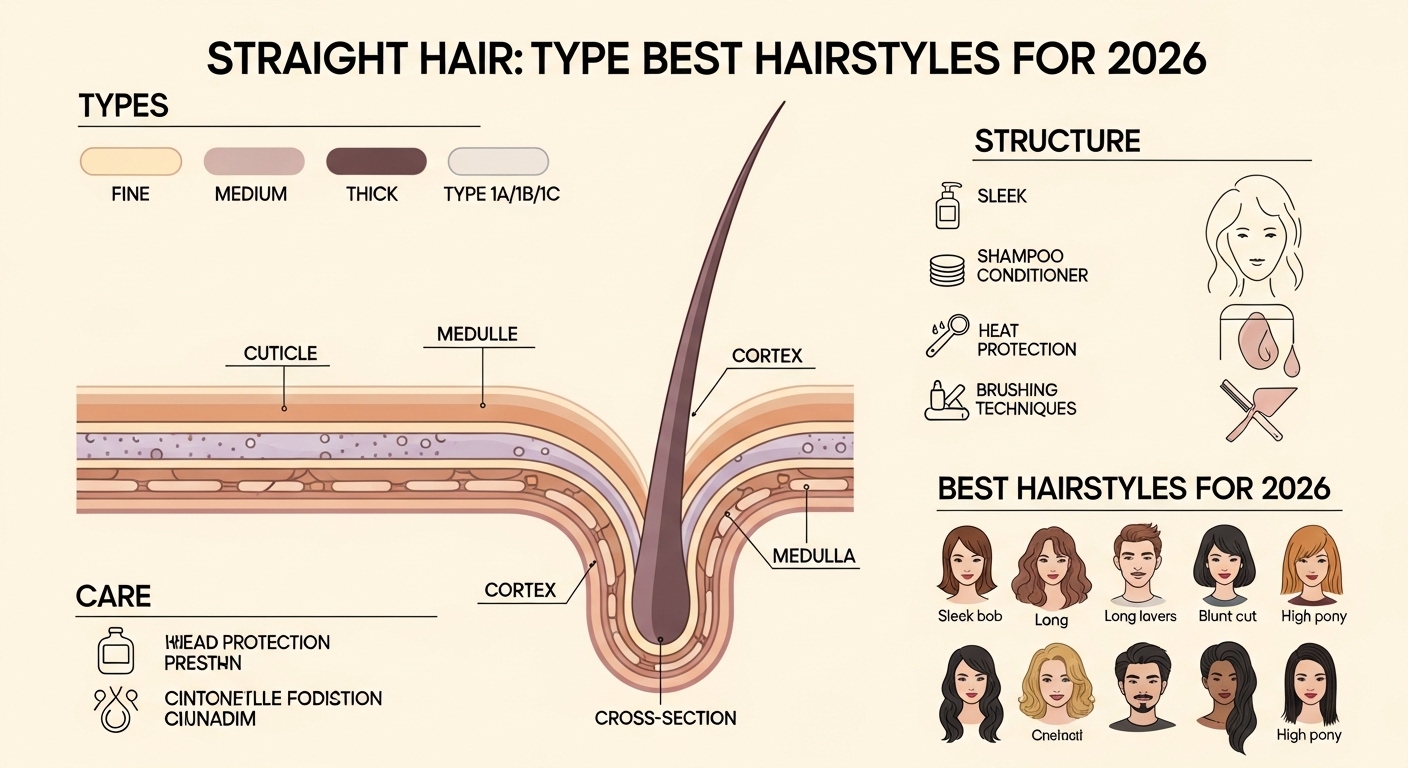
Straight hair is a natural hair texture in which strands grow evenly from the scalp without forming waves or curls. The strands fall downward in a uniform direction and tend to reflect light evenly, giving a polished and glossy appearance. This texture is often associated with neatness and simplicity because it does not tangle easily and usually appears well-arranged without extensive styling.
This texture occurs naturally across different populations and is defined more by follicle shape than by hair thickness. While it may look effortless, it has its own behavioral patterns that influence care and styling choices.
Difference Between Smooth and Wavy Textures
When comparing straight hair with wavy textures, the most noticeable distinction is the absence of bends along the strand. Wavy textures form soft curves that create natural lift, whereas smooth textures fall flat from root to tip. This difference affects both appearance and how the hair responds to environmental factors.
Wavy textures often appear fuller, while smooth textures emphasize shine and definition. Oil movement is also affected, as smoother strands allow scalp oils to travel faster along the length.
Natural Structure and Growth Pattern
The structure of straight hair is largely determined by a round hair follicle. This round shape allows strands to grow evenly without twists or curves. Because the surface of the strand is smooth, light reflects more efficiently, which contributes to a sleek appearance.
This same structure also explains why the texture struggles to hold curls or volume for extended periods. Without natural bends, the hair resists shape retention unless heavily styled.
Why Oil Appears Faster on This Texture
One common characteristic of straight hair is quicker oil buildup. Natural oils produced by the scalp move easily along smooth strands, coating the length evenly. Unlike textured patterns that slow oil movement, smooth strands allow faster distribution.
This behavior does not indicate poor hair health. It simply reflects how efficiently oils travel from the scalp to the ends, influencing washing frequency and product selection.
Classification of Naturally Smooth Hair
Although often grouped together, straight hair includes multiple subtypes based on thickness and density. These categories help explain why some individuals experience flatness while others retain body.
Fine strands tend to lie close to the scalp, while thicker strands may appear fuller and slightly resistant to styling. Understanding this variation helps explain differences in appearance within the same texture family.
Identifying Your Natural Hair Type
Identifying whether you have straight hair involves observing how your strands behave after washing and air-drying without products. Hair that dries without bends, waves, or shrinkage typically falls into this category.
Thickness, density, and response to humidity further refine identification. These traits influence how the hair reacts to styling and environmental conditions.
Genetic Influence on Hair Texture
Genetics play a significant role in determining straight hair. The shape of the hair follicle is inherited, making texture a largely genetic trait. If parents carry genes associated with smooth follicle structures, the likelihood of inheriting the same texture increases.
While hormones and aging may slightly alter behavior over time, the underlying growth pattern usually remains stable.
Haircuts That Suit This Texture Best
Haircuts designed for straight hair focus on balance and structure. Blunt cuts emphasize clean lines, while layered styles introduce movement. Medium lengths are particularly popular because they prevent heaviness without sacrificing shape.
The right cut enhances natural flow rather than forcing artificial volume.
Short and Long Style Preferences
Both short and long styles work well with straight hair. Short styles highlight sharp edges and symmetry, while longer styles emphasize smoothness and shine. Modern trends favor minimal shaping that enhances natural alignment rather than dramatic sculpting.
Length choice often depends on personal preference rather than texture limitations.
Volume Concerns and Natural Balance
A common concern with straight hair is lack of volume. Because strands fall directly downward, natural lift at the roots is limited. Fine density increases this effect, while thicker strands may appear fuller.
This characteristic is structural rather than problematic and can be balanced through haircut selection rather than heavy styling.
Natural Care and Home-Based Support
Care routines for straight hair focus on maintaining scalp balance and preserving shine. Lightweight cleansing and conditioning approaches support natural behavior without weighing strands down.
Simple, consistent care supports long-term appearance more effectively than aggressive treatments.
Best Hairstyles for 2026
In 2026, straight hair trends emphasize simplicity, symmetry, and natural texture. Clean partings, soft layering, and polished finishes dominate modern style preferences. The focus is on enhancing natural alignment rather than transforming texture.
These styles reflect a broader movement toward effortless grooming and understated elegance.
Conclusion
Straight hair is defined by smooth growth, reflective shine, and structural simplicity. While it may lack natural volume and show oil more quickly, its versatility and clean appearance make it timeless. With informed haircut choices and balanced care, this texture remains adaptable and consistently stylish across trends.
FAQs
Is this texture easy to manage?
It is generally low in tangling but requires balance to manage oil and flatness.
Can texture change over time?
Minor changes may occur due to hormones or aging, but the natural pattern usually remains.
Does it suit all face shapes?
Yes, when paired with the right haircut, it complements most face structures.
Is it stronger than other textures?
Strength depends on strand thickness and care habits, not texture alone.